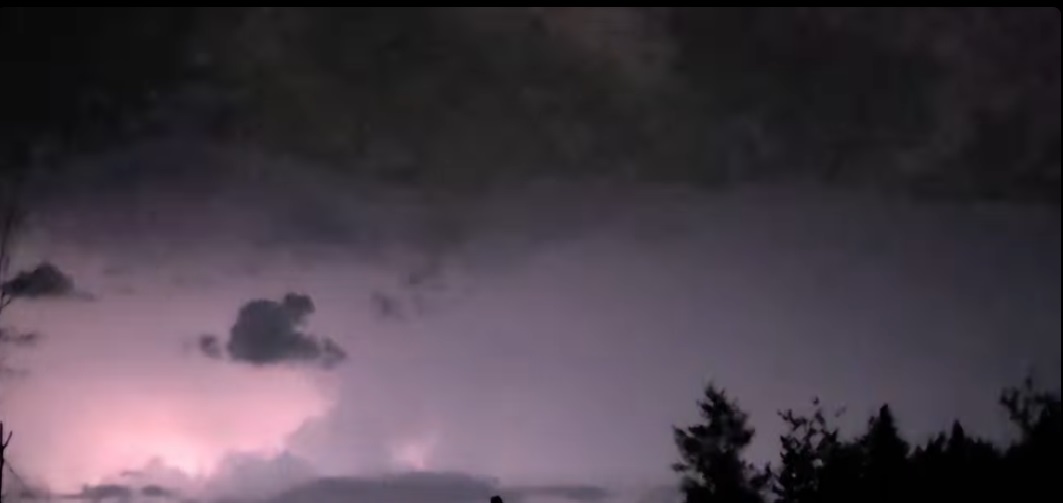




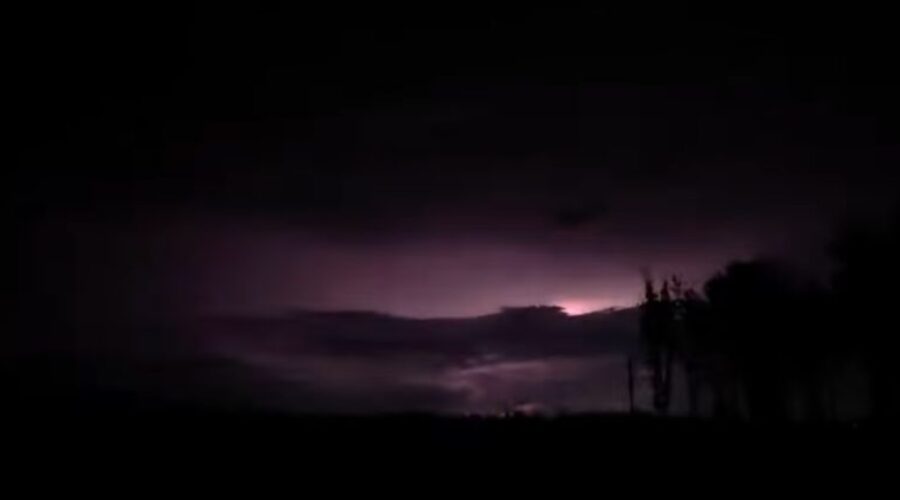
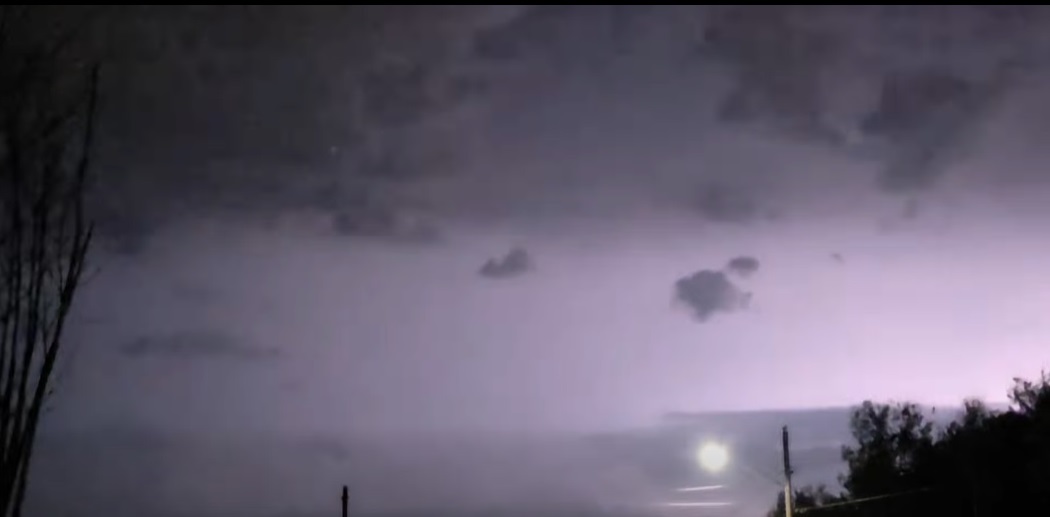
Social media lit up Sunday night with videos of flashes illuminating the sky across the province.
Many posts describe it as ‘heat lightning’ but according to Environment and Climate Change Canada meteorologist Jill Maepea, it’s not a special type of lightning.
“Meteorologically speaking, it is really just lightning. What people commonly call heat lightning is typically lightning from a distant thunderstorm. The storm is far enough away that thunder cannot be heard, but the flashes remain visible because light travels much faster than sound.” Maepea explained.
“It’s too far away to hear the thunder, but you can see the flashes.” It’s not just one or two flashes of lightning, but several in a row, quickly one after another.
She added that the term has been used for generations and is often associated with hot summer evenings.
“Sometimes the effect is enhanced by sunset colours reflecting through clouds, leading people to believe they are seeing a unique weather phenomenon.”
The display on Sunday night was linked to a series of thunderstorms moving through parts of New Brunswick.
Maepea said some thunderstorms tracked through the Moncton area, while much of the lightning activity was concentrated north of the city. Other storm bands affected areas around Bouctouche and points farther north.
“It was a mixture of thunderstorms that were distant, as well as thunderstorms that were actually hitting the region,” she said.
The widespread storm activity also explains why residents received a steady stream of weather alerts throughout the evening, including severe thunderstorm watches and warnings in several regions of the province.
“Yesterday was quite active across the province,” Maepea said. “When you do have thunderstorms in the area, you’re going to have a lot of those alerts popping up.”
According to the Meteorologist, thunderstorms can develop and fade quickly, sometimes lasting only minutes before dissipating or reforming elsewhere, which means their movement across different regions often results in multiple warnings and updates throughout a single day.
Maepea explained the recent stretch of hot and humid weather also played a role in Sunday’s storm activity.
“Thunderstorms are driven by the hot air, as well as a contrasting, generally cooler air mass,” Maepea said.
But with the heat warnings now lifted in New Brunswick and less humid air moving into the region, forecasters are not expecting a repeat of Sunday’s widespread thunderstorm activity in the immediate future.
While the possibility of isolated afternoon thundershowers remains, Maepea said conditions that fuelled the dramatic lightning displays have weakened.
“We aren’t anticipating anything today like we saw yesterday,” she said.
But residents can expect thunderstorms to return at times throughout the summer. “Large outbreaks are often linked to periods of heat, especially when cooler air begins pushing into the region,” Maepea said.
“It’s actually the transition when the heat leaves and the new air mass moves in, that’s how you get those really active days.”