




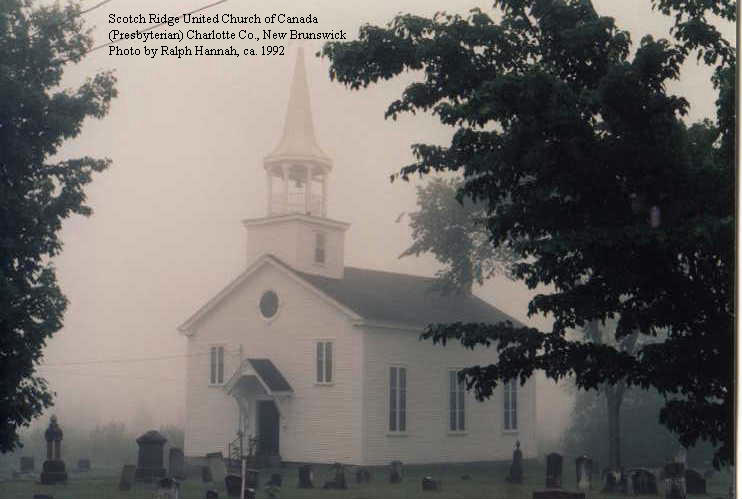
Scotch Ridge Church
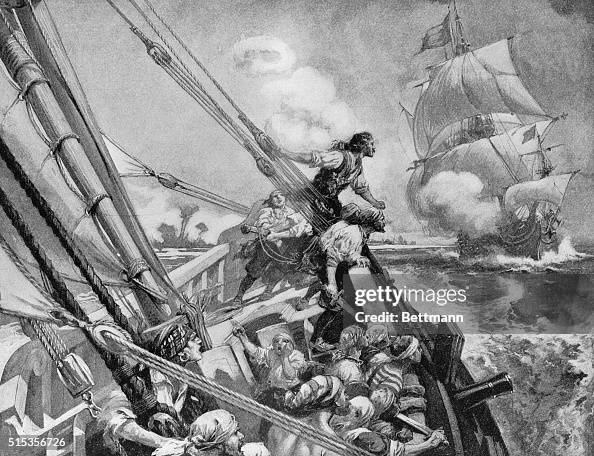
In 1803, seventeen Scottish families from Sutherlandshire landed in Charlotte County. They were originally bound for North Carolina, but when they had initially made landfall in Boston, they were diverted to St. Andrews due to yellow fever outbreaks in America. The settlers, feeling discouraged by what they saw in the area though, decided to depart for Nova Scotia. However, other Scottish merchants from St. Andrews, having heard of their fellow country men’s quick departure, hurriedly outfitted a vessel and actually pursued the Scotsmen to try and convince them to return!
Take a moment to picture that! As the families made their way back out into the turbulent Bay of Fundy, they’d have seen another ship closing fast behind them, desperately trying to signal. To be a “fly on the wall” during the conversation as the two ships pulled alongside one another would have been interesting!
Upon successfuly selling the Scotsmen on the untapped potential of the area, Robert Pagan of St. Andrews was instrumental in settling them; raising 134 pounds sterling for their re-settlement and to bring four further Scottish families from Digby, Nova Scotia. While St. Andrews surveyor Donald MacDonald produced a land survey to settle the newcomers.
They were given land grants, where a community developed. Scotch Ridge, as it became known, established itself as an isolated, tight-knit, and Gaelic-speaking Scottish community
By the early 1810’s, parts of the original clan had further settled Little Ridge to the south, and Oak Hill, Basswood Ridge and Pomeroy Ridge to the north.
In 1831, the Scotch Ridge Church was built, which served as a central hub for Gaelic-speaking Presbyterian services for decades. By 1866, Scotch Ridge had approximately 30 families and a population of around 200, before beginning its eventual population decline around the later part of the 19th century, along with many other rural communities, as the world became more industrialized and centralized.