



The Bartlett Mill Dam
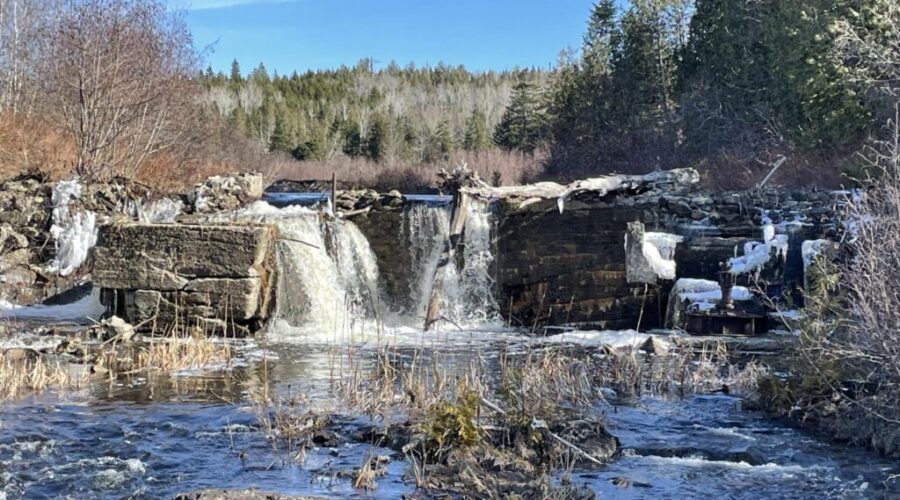
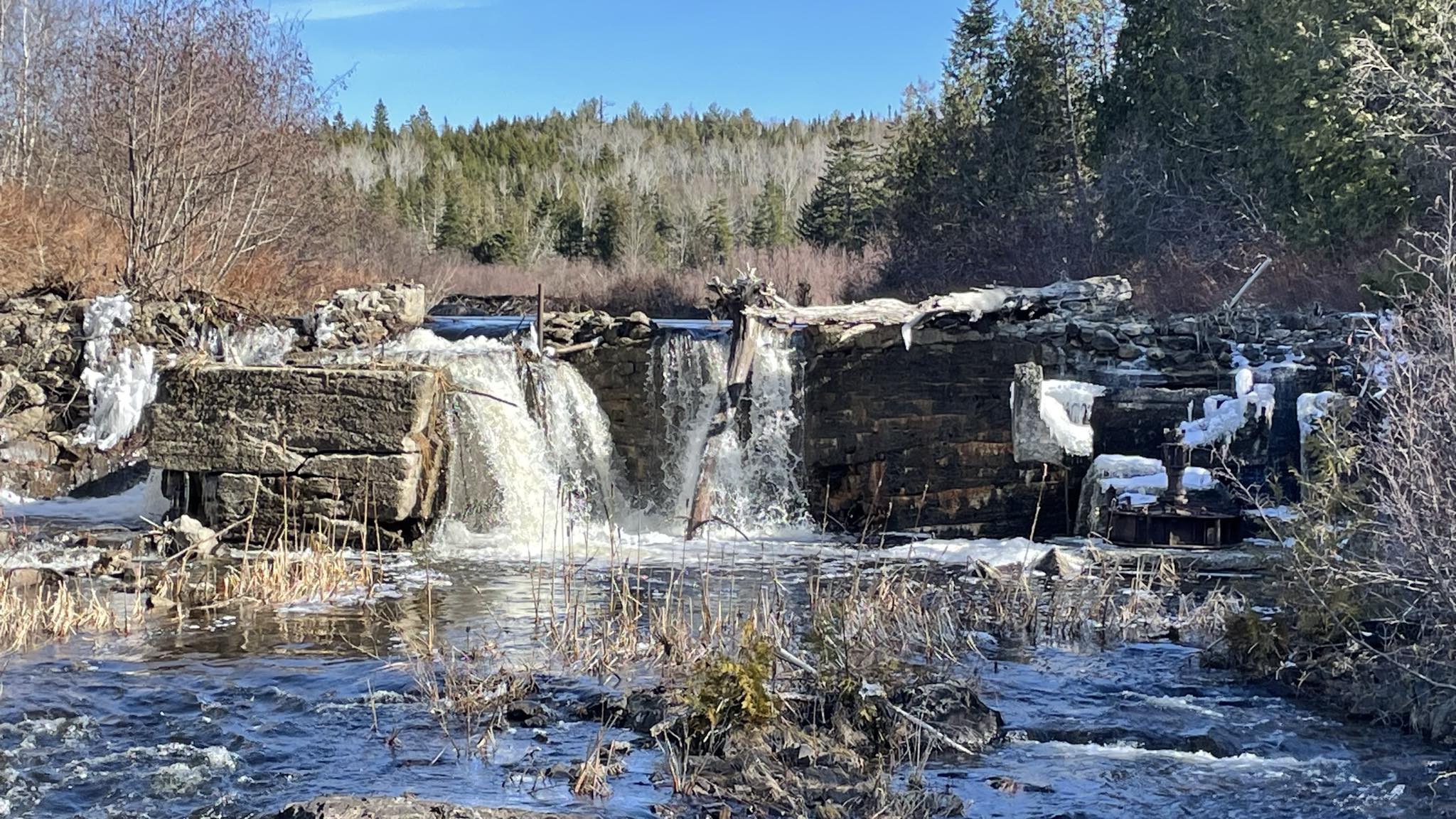
A couple of weeks ago, we looked at the history of some of the early mills of Charlotte County and those who built them. Now, let’s take a look at some more of the early industrial pioneers of our county, starting first with The Bartlett Mill in Bocabec, just past the first St. Andrews exit on your way toward St. George on Route 1. Situated on the road that still bears its name, the Bartlett Mills were owned by Leonard Bartlett who settled in the area around 1810, after relocating from Maine. He built a dam (which still stands) to control the water flowing out from the nearby lake (which would later be named Goldsmith Lake). He then built a carding mill, sawmill and gristmill, which turned the area into a major economic hub. The mills specialized in grinding buckwheat and corn, carding wool, and sawing lumber. Later operations included producing cedar boxes for the Connor Bros. company and, later, cedar picket fencing.
Machinery is still visible at the dam
The McAllister Mill was built on the St. Croix River in Milltown by John McAllister in 1803. This mill produced cornmeal and used a toll system. This meant farmers who brought their corn there to be processed would owe McAllister 10% of the cornmeal as payment, which he would sell. This was one of the biggest mills in operation in Charlotte County at one time, with it being powered by 19 large wooden water wheels harnessing the flow of the mighty St. Croix. This was all washed away by a massive flood in 1923.
The Dotten family operated a gristmill in Oak Bay from 1856 to 1904, when Russell Dotten, the last operator, moved to St. Stephen.
Brothers Thomas and Alexander McCann built a sawmill and a gristmill in Rollingdam in the 1870’s, powered by the Digdeguash River. Both mills were swept away by a flood in 1900.
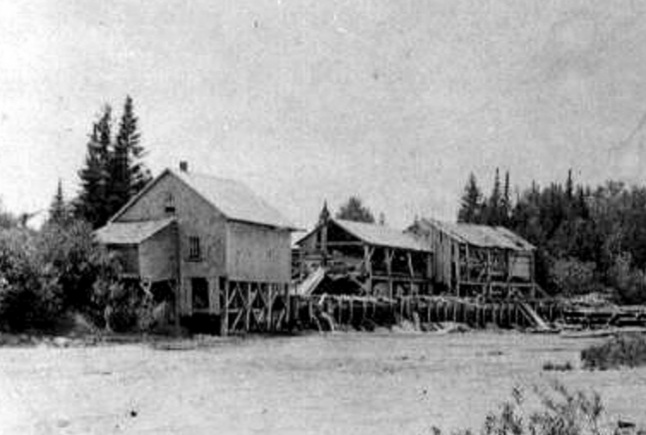
The McCann Mills in Rollingdam
Elmsville was once home to the Carson oat mill. Father Charles Carson and his son William operated this mill in the 1840’s and 1850’s, but business declined when William left for California in the late 1840’s to take part in the gold rush.
The Campbell gristmill was one of the few mills in Charlotte County powered by a wind mill. It stood on the banks of the Magaguadavic River near St. George. Details are sparce on this mill, but it specialized in grinding oats and operated around the mid 1800’s.
These mills were a vital part of early Charlotte County. Not only did they facilitate the processing of numerous raw materials, but they also served as hubs which many communities would spring up around. When bringing your materials to be processed, you were left with a lot of time on your hands while you waited. Hence, the areas surrounding these mills became ideal locations for other enterprising locals to open businesses such as stores, post offices, taverns and more.
It’s a fascinating era of early Charlotte County history, when mill ponds, water wheels and wind mills dotted the local landscape, reflecting the truly ambitious spirit of early pioneers.