


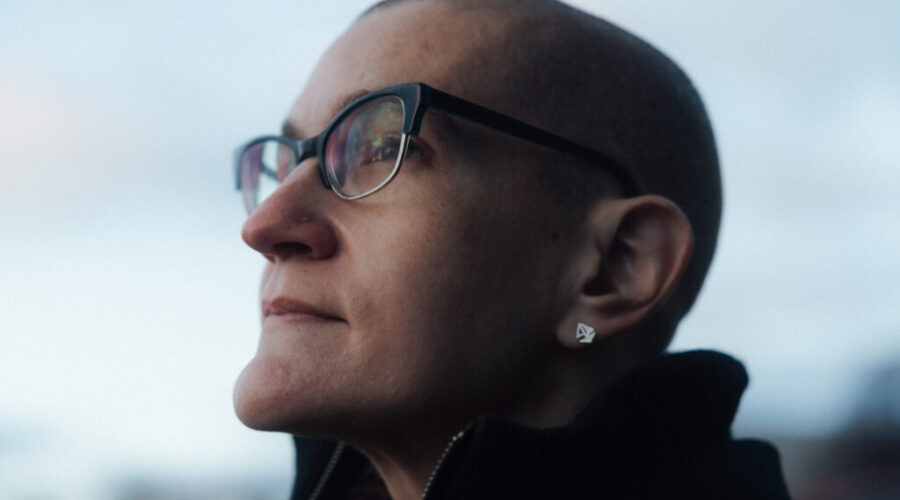
April Hubbard may have only planned to live for a few more months when she first announced her intent to pursue Medical Assistance in Dying back in 2022, but that lead to her having the freedom to really live.
This is the story of a documentary called The Last Days of April, and you will soon have a chance to see it in Hubbard’s home province.
Hubbard says not a lot of people get the chance to speak up about their experience with Medical Assistance in Dying, also known as MAID. Part of her philosophy of the last few years has been “nothing about us without us.”
“I wanted to be one of the first people to be able to speak up openly about what MAID can be and the beauty that it can bring to somebody’s life and to a community and what it does to bring peace to people,” says Hubbard.
“The documentary has allowed me to do that.”
MAID still evolving
In Canada, MAID has been legal since June 2016 and is still new enough that its usage is growing, according to the federal government’s Sixth Annual Report on medical Assistance in Dying in Canada. Some critics have said that’s a bad sign of the system not working.
The growth has slowed, however, and only went up about 6.9 per cent from 2023 to 2024, according to that report.

There are legal safeguards in place, but when the law originally came out, it only allowed people whose death was reasonably foreseeable.
After a decision in 2021 from the Quebec Superior Court, eligibility expanded to allow people to use MAID even if their death was not reasonably foreseeable.
Just the next year, in 2022, Hubbard decided that was the boat she was in.
Injury ‘relapse’
She had lived with spinal bifida, and when she was a teenager, doctors found she had a tethered spinal cord due to a tumour in her spine.
But that year, Hubbard had her last “relapse,” as she calls it, meaning a sudden change in her condition that forced her to “recreate” herself and “just find ways to be part of society again.”
She had decided to pursue MAID but felt “a lot of loneliness and a lot of isolation,” so she planned to tell her story publicly in a way that most had not.
Ree and Meaghan Wright are twin documentary filmmakers. They were among the many people who checked in with Hubbard after she announced her plan online, but it went a bit further for them.
Hubbard says they “kind of enveloped me in all this love,” and at the end of the three-hour conversation, they asked if they could make a documentary about Hubbard’s experience with MAID.
Freedom to live
The Wright siblings were looking for their next documentary subject and asked if they could make it about her. Hubbard says the timing was “really serendipitous.”
“I felt I could trust them and that this was the right people for the story,” says Hubabrd.
But with MAID, Hubbard found she was no longer afraid of another sudden change in her ability that would leave her trapped in the medical system, suffering.

SUBMITTED: Ree Wright/Mirror Image Media
“I have the control now. And for the first time in my life, I get to make the choice of when it’s enough and what treatments I want.”
“It’s really given me a freedom to continue to live longer than I thought I was going to and really push further and have some amazing experiences I would have lost out on if MAID wasn’t an option.
Postponing MAID became the story
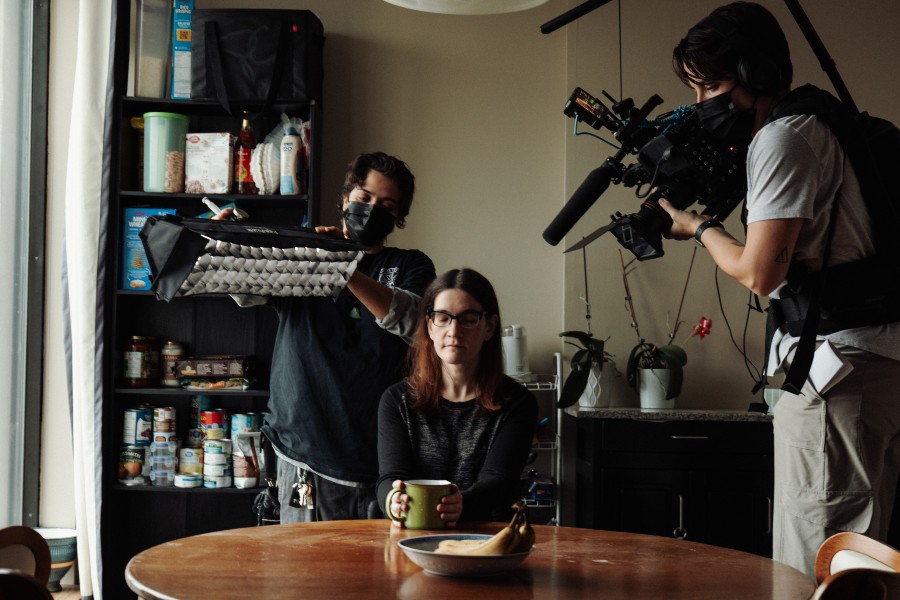
Ree Wright and Meaghan Wright are co-directors on the documentary. They also co-founded and co-direct through their production company, Mirror Image Media, based in Halifax.
Speaking to our newsroom, Ree Wright says they wanted to help tell Hubbard’s story partly because of the controversy around MAID.
But throughout filming, the story also became about how Hubbard decided to postpone her MAID date and the rationale behind why she did, says Wright.
SUBMITTED: Ree Wright/Mirror Image Media
Two broadcasters were on board—OutTV and Accessible Media Inc.—and they let them push the deadline, but not indefinitely. They had to hand in the documentary before Hubbard’s MAID date.
“If it was up to me, I would still be filming,” says Wright.
“This story is really still unfolding.”
‘I’ll be long gone by then’
Wright says pushing it was bittersweet, because on the other hand, this meant that, in April, when the film premiered at the Hot Docs Festival, Hubbard was there to see it herself.
Hubbard says that the twins would sometimes ask for feedback on the documentary, she would say, “That’s for you to figure out, because I’ll be long gone by then.”
“I didn’t see it in advance because I wanted to see it in community, surrounded by all that love, and it was a really amazing experience to get to feel all everybody’s reaction right alongside me as we watched,” says Hubbard.
“It was it was really cathartic to get to experience that.”

Photo by Carolina Andrade. SUBMITTED: Ree Wright/Mirror Image Media
Hubbard says she is excited to see it with the hometown crowd in Halifax on Sept. 18 at 6:15 p.m. as part of the Atlantic international Film Festival.
You can also catch The Last Days of April at the Lunenberg Doc Fest at 4:30 p.m. Sept. 26 and Parrsboro Film Festival Oct. 4.