



A Nova Scotia lobster exporter says the seafood industry was caught off guard when Canada briefly proposed a 25 per cent tariff on American seafood imports, warning the move could have triggered consequences on both sides of the border.
Fishermen across the province say they’re relieved that the federal government removed their decision.
The move followed the collapse of a trade deal between Canada and the U.S. and retaliation against 50 per cent tariffs.
Stewart Lamont, managing director of Tangier Lobster, says the initial announcement came as a shock to an industry that relies heavily on cross-border trade.
“We did not anticipate that seafood would be in the range of topics that would be featured for retaliatory tariffs. So, it was surprising, somewhat disappointing.”
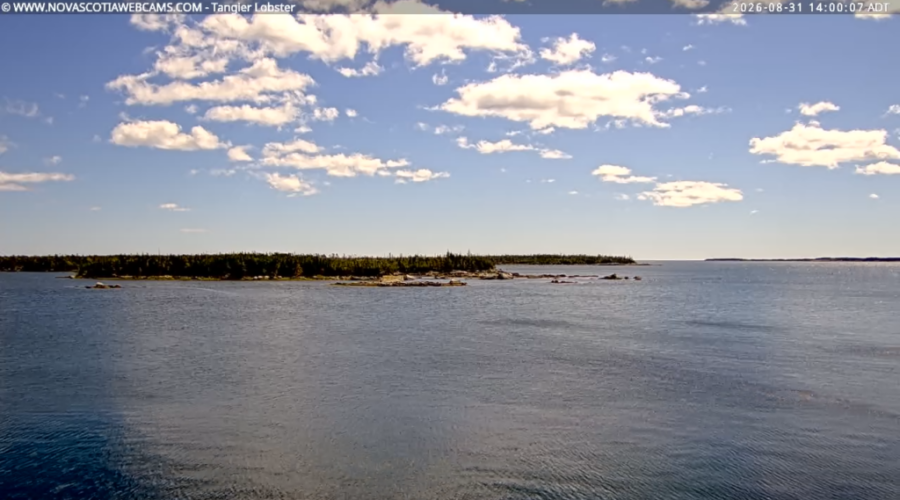
The company, based on Nova Scotia’s Eastern Shore about an hour east of Halifax-Dartmouth, focuses exclusively on live lobster exports. Lamont says Tangier Lobster ships to 13 countries, serves between 65 and 70 clients, and operates a holding facility capable of storing 500,000 pounds of lobster.
Industry relieved after tariff reversal
While Canada’s proposed tariff was dropped within 24 hours, Lamont says the industry had already begun preparing for the fallout from a potential trade dispute.
“The obvious initial reaction was relief because the 25% tariff on American seafood coming into Canada would inevitably have led to an equal or greater tariff imposed by America on Canadian seafood going into America.
“We were expecting the worst, and when the Canadian tariff was removed, we are more positive, more confident that a specific battle of tariffs on seafood is less likely to happen.”
Although Tangier Lobster does not currently sell into the United States, Lamont says the company would still feel the effects of wider industry disruptions.
“It would impact the vast majority of our colleagues in the industry who are either buying from the U.S. or selling to the U.S. or doing both. So, anything that impacts all our colleagues ultimately would impact our company.”
Cross-border lobster trade deeply connected
Lamont says the seafood industry operates through a deeply integrated supply chain stretching across Atlantic Canada and New England.
According to him, major shellfish processors in New Brunswick, Prince Edward Island, and Nova Scotia regularly import American lobster, and process it into products that are then sell much of it back into the U.S. market.
“Those companies purchase at certain times of the year, particularly right now, American seafood, specifically American lobster. That product is trucked into these facilities in Atlantic Canada. It is processed in those facilities to turn the live product into value added frozen offerings.
“So, for example, lobster tails, lobster claws, coal cook lobster, various lobster meat, minced lobster meat, that are then sold into the marketplace, and for those shellfish processors, the overwhelming marketplace is the United States of America. It comes northward across the border to be processed, and it goes southward across the border to be distributed in the U.S.”
Lamont compared the relationship to the automotive sector, where parts can cross the Canada-U.S. border multiple times during manufacturing.
“We are very, very closely integrated as between Atlantic Canada and New England. So, tariffs in either direction, or worse yet, in both directions, would have had serious, serious impacts on the business model because we are a high volume, thin margin business, and so we couldn’t as an industry afford 25% tariffs or anything close.”
Tariffs could have reshaped business models
He says a 25 per cent tariff would likely have forced significant changes for processors that rely on American lobster supplies.
“It would have caused a fairly serious transformation in the business model. Companies that would actively buy lobster in August, September, October, November from America. If they would have had a 25% tariff imposed, they would not be able to afford, generally speaking, to buy that product.
“Now, they might have shared the tariff with the seller, they might have bought it lower prices so that the tariff was not as consequential, it’s all speculation. Suffice to say it would not have been good for our sector.”
For now, the immediate threat of Canadian tariffs on American seafood has passed. However, Lamont says uncertainty remains over whether the U.S. could still impose tariffs on Canadian seafood exports.
“It’s very dynamic, very fluid, obviously. So, it’s the hope of everybody in our sector that Canada and the United States somehow gets back to the table.”