



New Brunswick’s public‑health officials are reminding residents to be aware of cyanobacteria in lakes and rivers as warmer weather draws more people outdoors.
Chief medical officer of health Dr. Yves Leger said some species of cyanobacteria, also known as blue‑green algae, can produce toxins that pose risks to people, pets, livestock, fish and wildlife.
“By learning how to recognize cyanobacteria blooms and benthic mats, residents can take simple steps to protect themselves, their families and their pets,” Leger said.
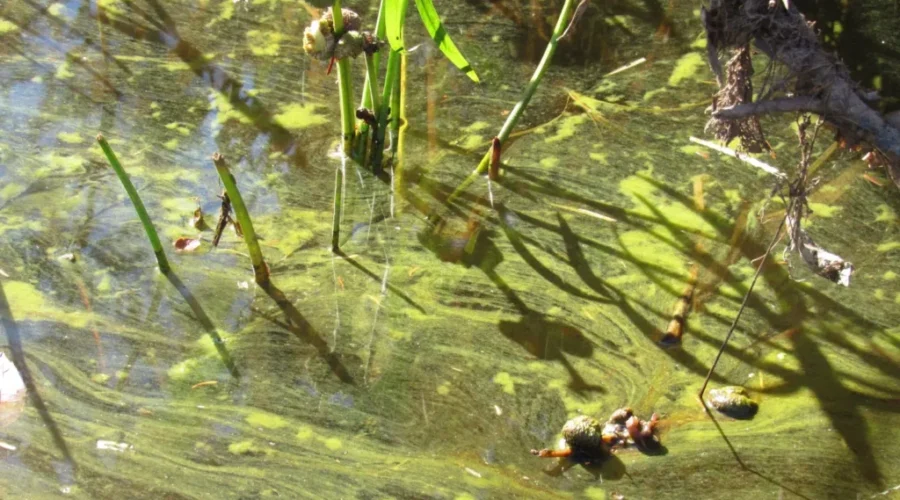
Cyanobacteria can appear in different forms, according to a government release.
Surface blooms are often blue‑green but may also be green, red or brown. Benthic mats grow along the bottom of lakes and rivers and can resemble dark green, brown or black vegetation.
When washed ashore and dried, the mats may look grey or brown and can cling to rocks, aquatic plants and other surfaces.
Health officials say exposure to cyanobacteria toxins can cause skin, eye and throat irritation, while swallowing contaminated water may lead to stomach and intestinal illness.
Pets and animals are particularly vulnerable, and ingesting toxins can lead to serious health consequences.
Leger said blooms can develop quickly and may not always be easy to predict.
He encouraged residents to check the water and shoreline before entering any lake or river and to avoid swimming or wading where blooms or mats are visible.
The provincial government is also reminding people to supervise children and pets near the water, avoid swallowing lake or river water, bathe or shower after swimming, and stay out of the water with open cuts or sores.
Pet owners are warned that benthic mats can be highly toxic and may attract dogs because of their odour.
Environment and Climate Change Minister Gilles LePage said ongoing research and water‑quality testing are helping officials better understand where cyanobacteria occur.
LePage added that the work is also shedding light on the toxins they may produce and the environmental conditions that influence their growth.
“This knowledge will help support informed decision‑making and the protection of New Brunswick’s water resources,” LePage said.