




The Lake Utopia Medallion
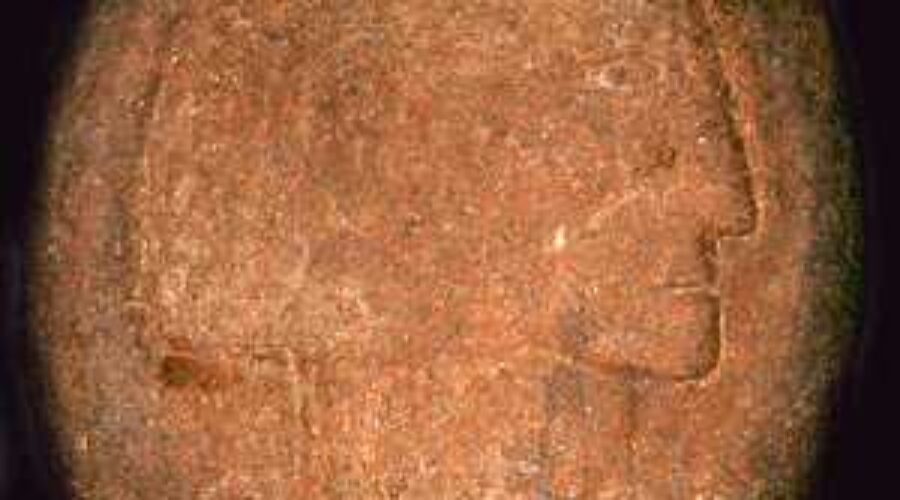
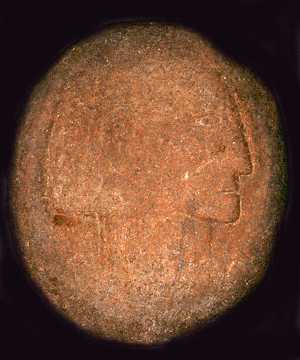
Although mostly forgotten now, an object found not far from the shores of Lake Utopia caused quite a global uproar in the 19th century! Found by a local stone mason in the fall of 1863, who was collecting rocks to build a fireplace. When he turned over a granite stone and removed the moss from its surface, he was surprised to find the faint profile of a face carved into it. His thought was that maybe a local museum or collector might like to have it. But, upon its arrival in Saint John – it caused an immediate sensation among experts and scholars; with the Saint John Morning News publishing a story about the mysterious object on Wednesday, February 17, 1864. It was sometimes referred to at the time as “The Laney Stone”, after the man who found it – James Laney.
The profile and hairstyle seemed to match that of a European person – or perhaps it was speculated even Egyptian, more than a local indigenous one. And given its theorized age at that time of perhaps thousands of years old – that didn’t make much sense. You see, for a stone to be carved this way at the time, the use of metal tools would have likely been required. And there’s no evidence of the indigenous people of North America having such tools during that period. No other similar object of native origin has ever been discovered in New Brunswick, either. So much of a stir the object created, that scientists and journalists from organizations such as The Smithsonian and The London Illustrated News took interest. Some even accompanied the mason back to the spot where he said he found the object, which some of them speculated looked like the remains of some long-lost alter, or grave.

Acadian settlers on St. Croix Island
Later, however, local historian William F. Ganong of St. Stephen worked with Dr. William McInnis of the Geological Survey of Canada to examine the object. They concluded that the carving had been done much later than originally speculated. They suggested that it was most likely left behind by one of the French Acadian settlers that accompanied Samuel de Champlain to settle on St. Croix Island in 1604. Among the group were numerous tradesmen; including carpenters, locksmiths and stone masons. This opinion was shared by the local indigenous people.
As for how it found its way to Lake Utopia: Ganong suggested that it may have been taken there by canoe by the Passamaquoddy people, after the French abandoned St. Croix Island in 1605. Perhaps it’s even a portrait of Champlain, himself?
The “Lake Utopia Medallion”, as it eventually became known, now resides in the collection of the New Brunswick Museum.