



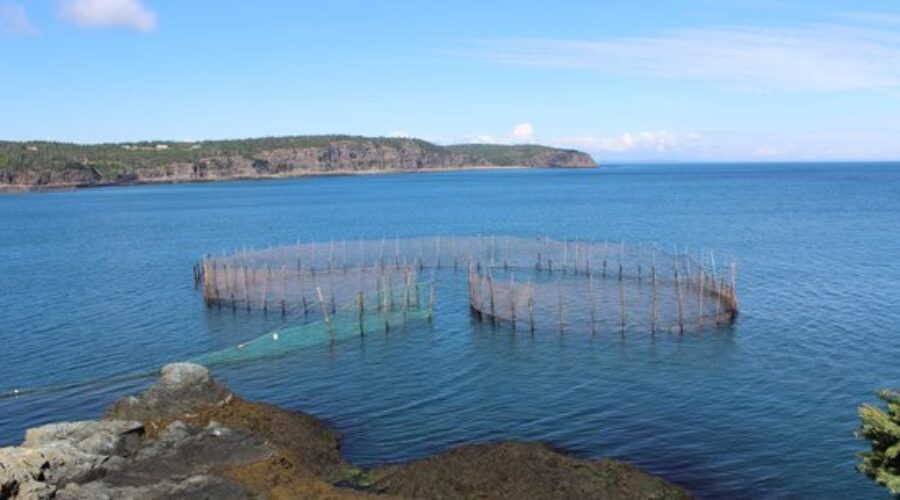
The fishing industry has deep roots in our county. In fact, according to a 2021 census, it accounts for more than 25% of our regions economy, with an estimated 18% of the local population employed in the industry. Some of our biggest exports include salmon, herring, lobster and scallops. One of the more identifiable parts of the industry are the weirs scattered throughout Charlotte County; a “V”, or heart-shaped structure made of wooden stakes, stone, or netting placed in rivers or tidal waters to trap fish as they swim with the current or as the tide recedes. Being situated on the Bay of Fundy, these traps work perfectly for our waters, with the history of their usage dating back hundreds of years. There are many of these structures visible around the coastal areas of the county, as well as offshore on Deer Island, Campobello Island and Grand Manan Island; with many around the islands particularly a popular photo-op for visiting tourists.
But did you know that each individual weir has its own unique name? Names of some of the weirs past and present in Charlotte County include Rose Rock Weir, Tub Island Weir, Thomas Justason Weir, Bobcat Weir, Fox Weir, Walt’s Head Weir, Bar Weir, Cricker Weir, Shaw Island Weir, Corken Island Weir, Patterson Weir, Little Sturgeon Weir, Garden of Eden Weir, Chops Head Weir, Fox Island Weir, Birch Cove Weir, Pig Rock Weir, Lime Kiln Weir and Goss’ Head Weir.
And perhaps most comically, Mistake Weir in Letang.